
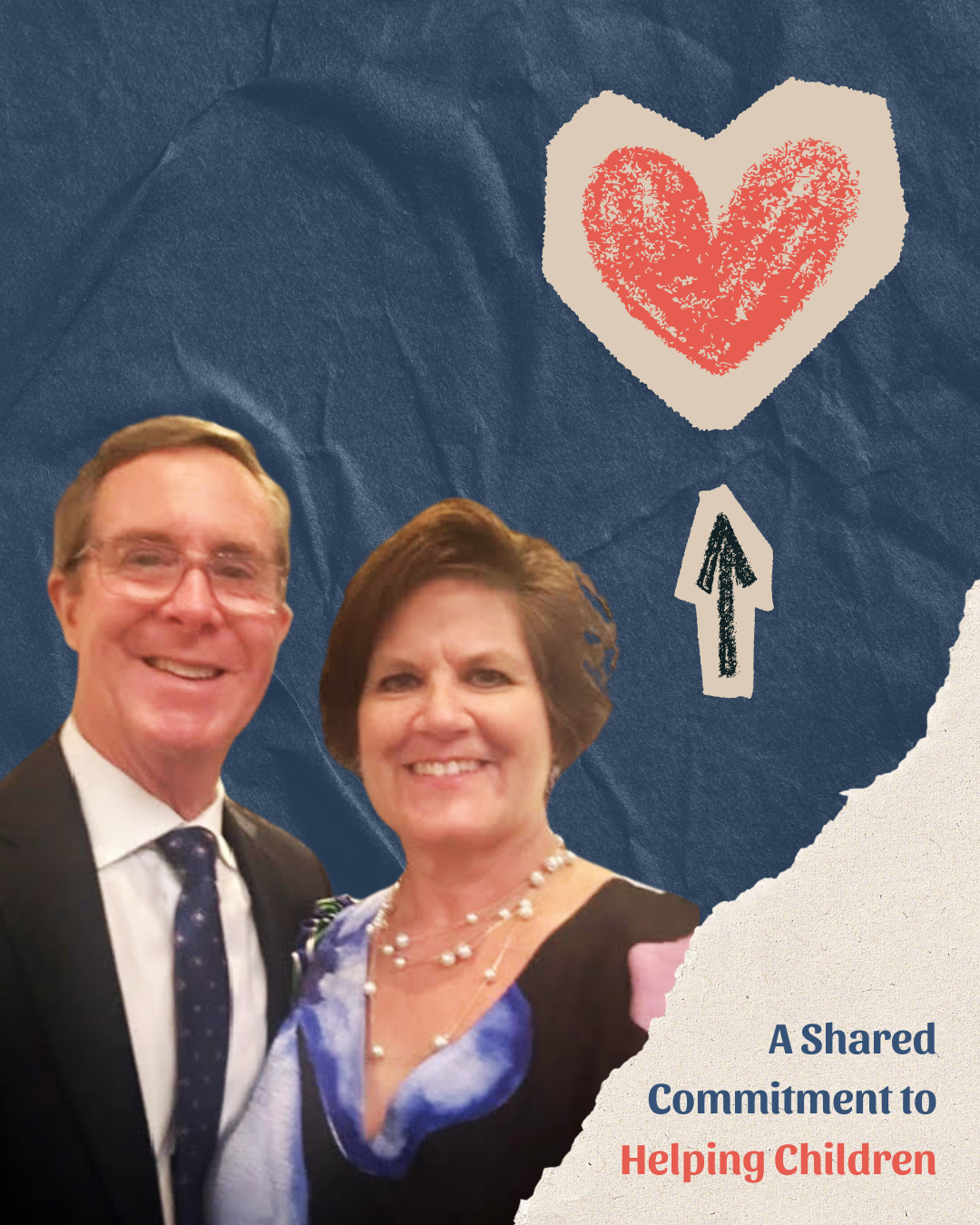
Meet CASA Volunteer Tracy Hearn and Her Helping Heart, Marc
When people think about CASA volunteers, they often picture the advocate standing beside a child in foster care, speaking up for their best interests and helping navigate a complex system. What many people don't realize is that CASA volunteers can also have a dedicated source of support behind the scenes: a Helping Heart.
The Helping Heart program allows CASA volunteers to designate a trusted family member, friend, or spouse who can provide emotional support throughout their advocacy journey. For Tracy Hearn, that support comes from her husband of 35 years, Marc.
Together, Tracy and Marc demonstrate that advocacy doesn't always happen alone.
A Calling to Help
Tracy became a CASA volunteer after spending nearly four decades working in the criminal justice field as both a practitioner and educator.
Throughout her career, she witnessed the devastating realities of child abuse, neglect, family violence, substance abuse, and extreme poverty. She also saw the long-term impact these challenges can have on children, particularly those who age out of foster care without a strong support system.
"We have worked with unhoused people for years and knew the statistics for kids aging out of foster care and becoming housing insecure are way too high," Tracy shared. "If I can do something to keep even one young person from being unhoused, I wanted to do that."
Inspired by friends who were already CASA volunteers, Tracy saw advocacy as a meaningful way to make a difference in a child's life.
Recognizing the Need for Support
For Tracy, the value of a Helping Heart was clear from the very beginning.
"As soon as I saw the Helping Heart program on my first day of training, I asked Marc to start the process, and he was happy to help," she said.
Having both spent decades working in criminal justice, Tracy and Marc understood the importance of having someone to lean on when facing difficult situations and traumatic stories.
"Having a Helping Heart gives you support and someone to ask for feedback when you have self-doubt or need emotional support," Tracy explained.
Supporting the Advocate
For Marc, becoming a Helping Heart was a natural extension of the partnership he and Tracy have built over 35 years of marriage.
"Tracy knew that being a CASA would require emotional support," Marc said. "We've seen a lot in our professional lives and supported each other through trauma, so it was a pretty easy decision to want to be able to support in this role."
After completing CASA's background check process and a one-day training, Marc officially became Tracy's Helping Heart.
While he doesn't work directly with children or participate in case activities, his role remains important.
"Knowing that I am helping play a support role in helping a child toward stability is rewarding," Marc shared. "Helping my wife work through difficult situations is an important role to me in all aspects of our lives."
Advocacy Is Stronger Together
Both Tracy and Marc encourage others to consider not only becoming a CASA volunteer but also serving as a Helping Heart.
"The training for CASA is pretty heavy," Tracy said. "It helps to have someone to talk to during that, too."
Marc points out that the Helping Heart process is much less involved than becoming a volunteer advocate, making it a great opportunity for those who want to support the mission in a meaningful way.
"If you're thinking about helping but unsure, being a Helping Heart might be a good first step."
At CASA of Tarrant County, volunteers are never alone. Whether advocating directly for a child or supporting the advocate behind the scenes, every role helps create brighter futures for children who need a consistent, caring adult in their corner.
Because sometimes changing a child's story starts with two people sharing one helping heart.