
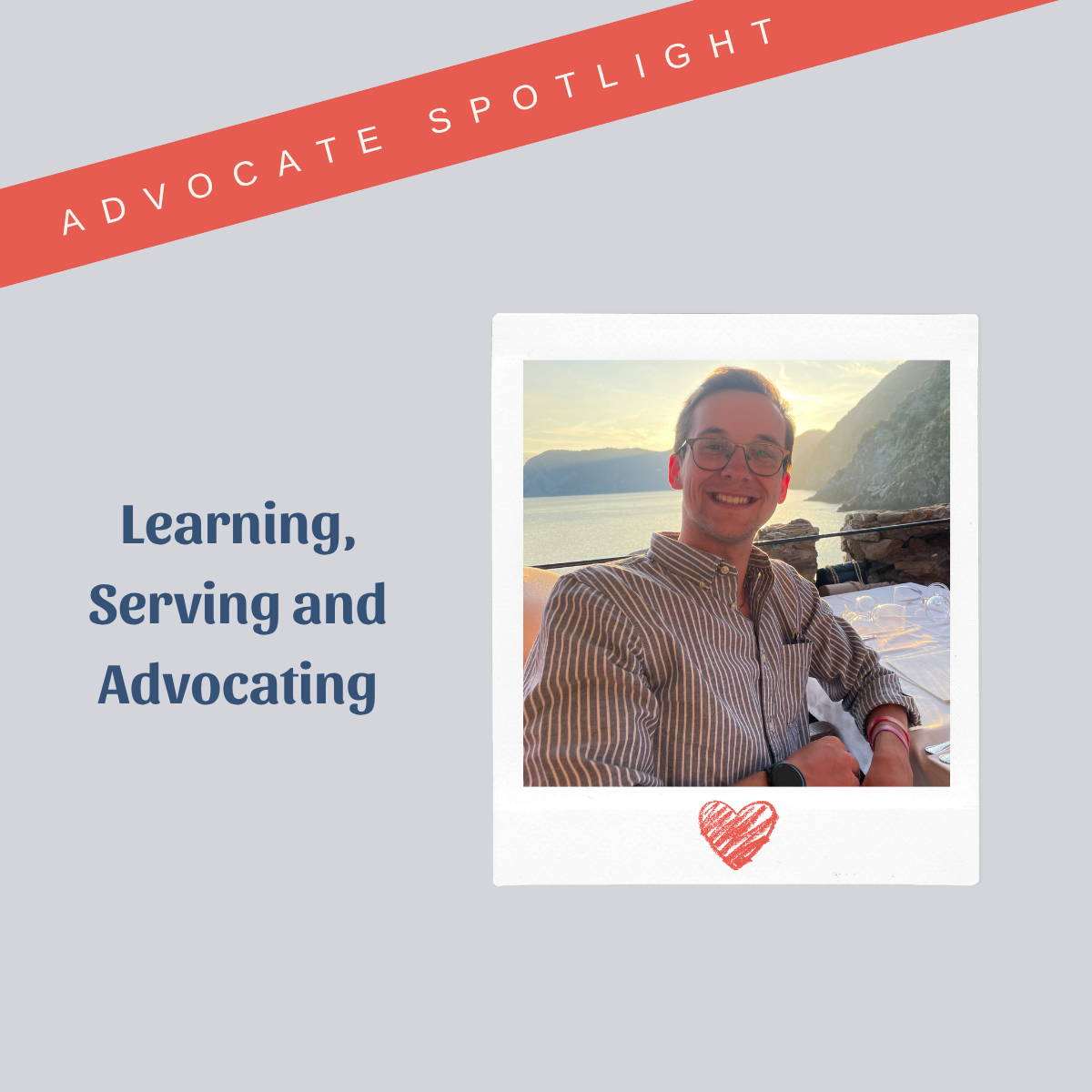
As students across Tarrant County head back to the classroom this fall, CASA of Tarrant County is celebrating students who are making an impact far beyond their own education.
For Mason Runkel, a third-year medical student at the Burnett School of Medicine at TCU, going back to school means balancing clinical rotations, studying and the demands of medical training. But amid a busy schedule, Mason has also made room for something deeply important to him: advocating for children in foster care as a CASA volunteer.
Mason hopes to pursue a career in pediatrics or dermatology, ideally combining the two as a pediatric dermatologist. His passion for working with children began long before medical school, and when he arrived in Fort Worth, he found himself looking for a meaningful way to become part of his new community.
“During my first few months of medical school, I really felt like I was missing that connection to serving my community and serving children around me,” Mason said.
Mason had first learned about CASA through friends who were members of Kappa Alpha Theta, whose national philanthropy supports CASA/GAL programs. A friend who became a CASA volunteer herself ultimately helped inspire Mason to take the next step.
“I wanted to develop a more meaningful connection to the surrounding community outside of just my medical school experiences,” he said.
The Power of Showing Up
Since becoming a CASA volunteer, Mason says one of the most meaningful lessons he has learned is just how much a consistent adult can matter in a child’s life.
“The most meaningful part of my CASA experience up to this point has been the depth of connection that I have been able to make with my CASA children in such a short period of time,” he said. “It has really emphasized to me how important consistency is to kids, especially those in the foster care system.”
Children in foster care may experience frequent changes in their homes, schools, caregivers and routines. Through those changes, a CASA volunteer can remain a consistent presence — someone who gets to know the child, advocates for their needs and helps ensure their voice is heard.
“With all of the moving parts and changes related to the average day for a child in foster care, I have seen that a consistent positive attitude and presence goes a long way at making them feel seen, appreciated and loved,” Mason said.
Learning Beyond the Classroom
For Mason, his CASA service and medical education have also begun to complement one another.
His medical training has helped him better understand and communicate about medications, treatments and healthcare resources when working with placement families and members of a child’s care team. At the same time, CASA has given Mason a perspective he couldn’t gain from a textbook or clinic alone.
“Until I became a CASA, I did not have a good understanding as to what medical and behavioral resources actually looked like for the families and the process to access them,” he said.
Seeing those systems from a child and family’s perspective has changed how Mason thinks about his future role as a physician.
“Through my time as a CASA I have been able to see firsthand what it means to get connected with healthcare resources, and I believe it will make me a better physician in the future.”
It’s an important reminder that education extends beyond the classroom. For student volunteers like Mason, CASA offers an opportunity to develop skills in communication, organization, collaboration and advocacy, while making a tangible difference in the life of a child.
Finding Community Through CASA
CASA has also given Mason the sense of community he was searching for when he first arrived in Fort Worth.
He has seen that community in everything from local shoe drives and family events to volunteer appreciation efforts and the support of CASA staff.
“I have been grateful and honored to be a part of an organization that does good in so many different ways,” he said.
That support became especially meaningful when Mason experienced a personal crisis after his apartment burned down. He recalls CASA staff checking in and supporting him through a difficult time.
“It has been a blessing to have such a great community in CASA to enhance my experience here in Fort Worth,” he said.
You’re Not Too Young — or Too Busy — to Make a Difference
College students and young professionals may assume becoming a CASA volunteer is something they should wait to do until they are older, more established or have more free time. Mason sees it differently.
“I think being a CASA volunteer as a young adult or college student is the perfect time in life to take on a volunteer experience like this,” he said.
Young adults, Mason points out, bring their own valuable perspective to advocacy. They still have relatively recent experience navigating childhood, adolescence, school and the transition into adulthood… experiences that can help them connect with the young people they serve.
CASA has also helped Mason grow professionally. Coordinating with the many people involved in a case, managing responsibilities and preparing thoughtful updates and recommendations for the court have strengthened skills he knows he will carry into his medical career.
“I feel as though I have grown so much personally and professionally from this role, and I feel as though it will make me a stronger professional and a stronger parent in the future,” he said.
His advice to students, or anyone else wondering whether CASA is right for them, is simple: take the first step and learn more.
“If you are on the fence, I would at least recommend reaching out to the Tarrant County CASA team to meet with them or ask to talk to a current CASA,” Mason said. “When you see the passion that this staff and these volunteers have for the kids of Tarrant County, you will have no doubt in your mind that you want to be a part of this organization.”
This back-to-school season, students across Tarrant County are preparing for another year of learning, growing and planning for their futures. Mason’s story is proof that you don’t have to wait until graduation to start making a difference.
Whether you’re a college student, graduate student, young professional or simply someone looking for a meaningful way to serve, you can be the consistent voice a child needs. Become a CASA volunteer and make an impact that reaches far beyond the classroom.